


CO-PROSPERITY FORCE
社會共榮力
CO-PROSPERITY FORCE
- Home
- Co-Prosperity Force
- Human Rights Management
Human Rights Policy
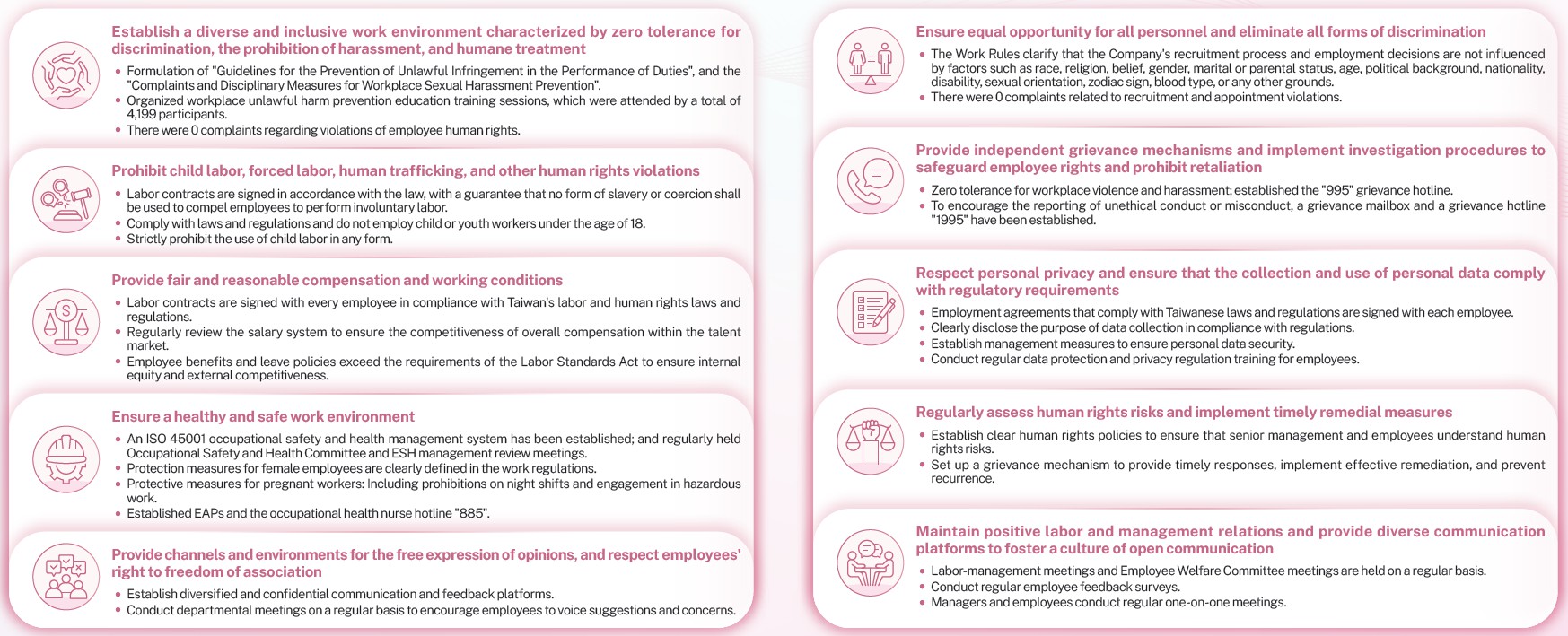
To implement its human rights protection concepts and policies, iST utilizes diversified, open, and two-way communication channels to listen to stakeholder opinions. The Company regularly discloses the goals, actions, performance, and progress of human rights management on its ESG website and in its sustainability reports. iST actively promotes diverse training and advocacy for human rights protection, introducing courses and drills on topics such as occupational safety and health, emergency response, first aid training, personal data protection, and the prevention of workplace harassment and sexual harassment to enhance employees' human rights awareness. To ensure the continuous implementation and optimization of human rights policies, iST has integrated human rights governance and training mechanisms focused on "eliminating sexual harassment and workplace bullying".
iST's Human Rights Policy 
The human rights management measures and effectiveness of iST
Human Rights Management and Due Diligence
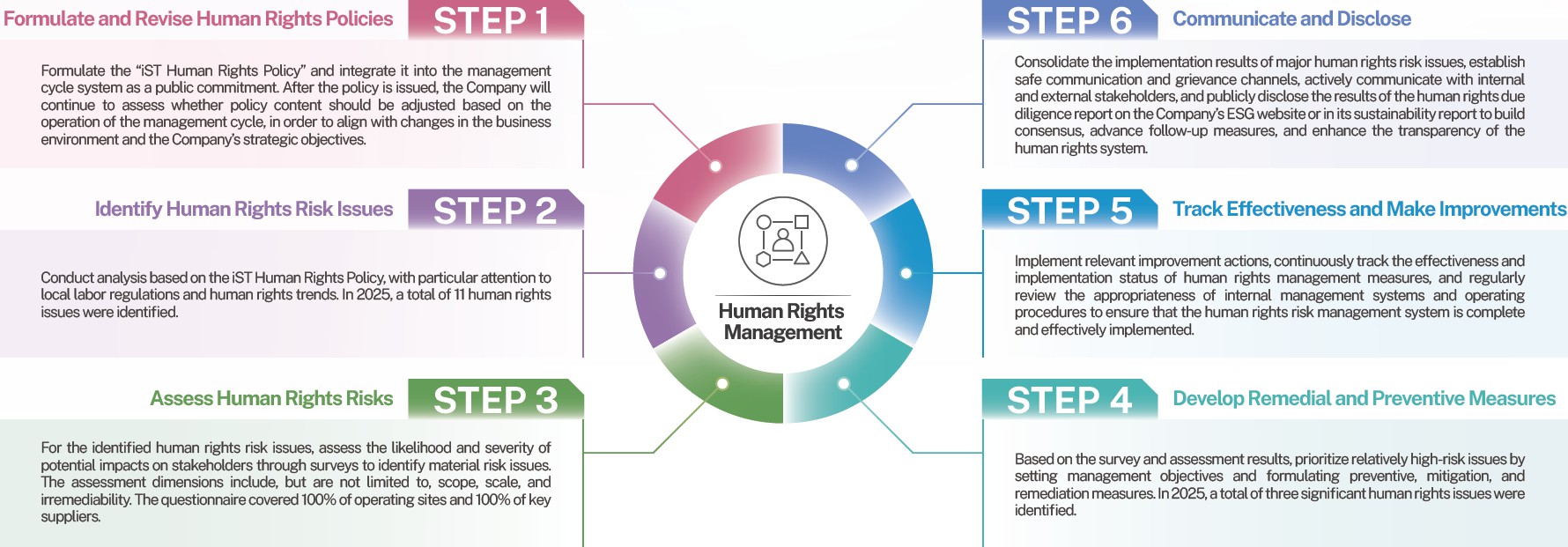
To ensure the effective implementation of human rights policies, in 2025, iST conducted its biennial human rights due diligence in accordance with the United Nations Guiding Principles on Business and Human Rights and corporate sustainability regulations. By referencing domestic and international "human rights due diligence process" standards and guidelines, the Company assessed and defined human rights risk issues while ensuring they were inclusive and diverse. The scope of this due diligence covered all personnel at the Taiwan headquarters, achieving 100% coverage of operating locations and all Tier-1 suppliers. Furthermore, due diligence assessments were performed following the risk identification process to ensure the absence of potential risks.
Preventive and Remedial Measures
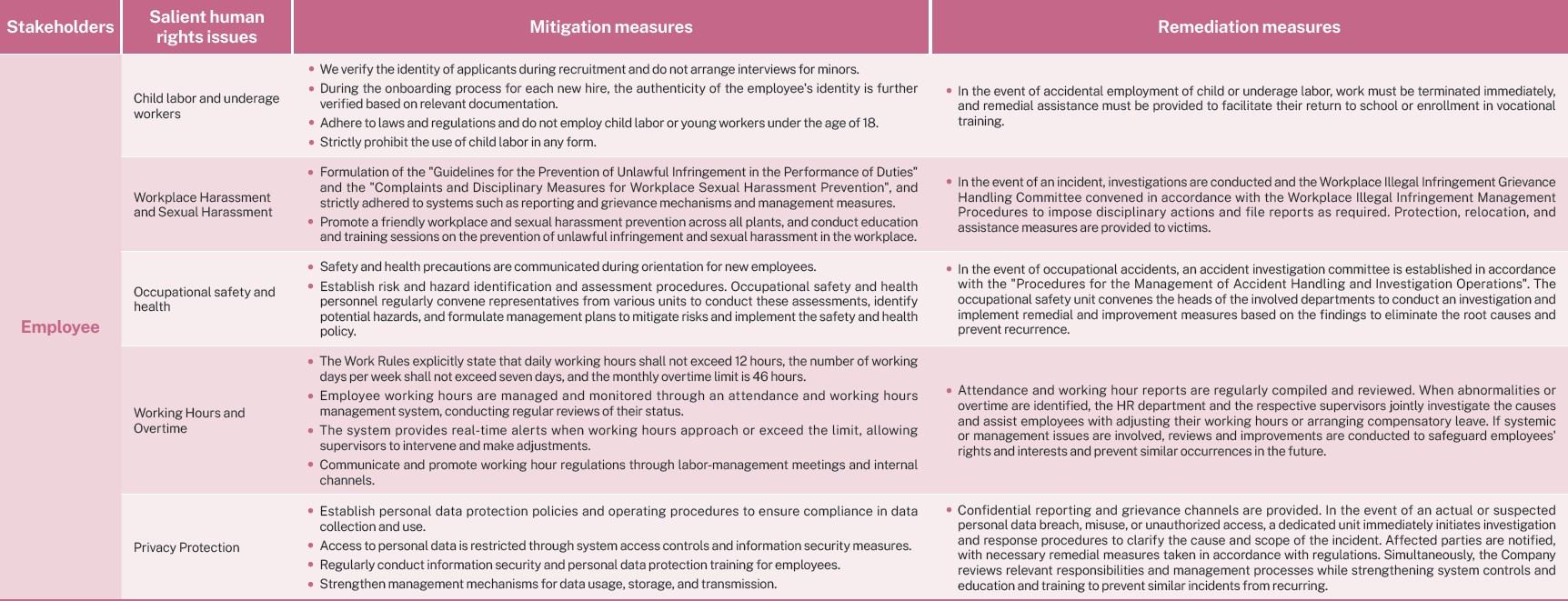
In 2025, we identified material human rights issues through questionnaires, reviewing our operations and value chain activities to collect feedback on human rights risks from key stakeholders, including employees of various ranks and genders. The survey results indicated that the overall human rights risk score remains low. However, five relatively high-priority human rights issues were initially identified: occupational safety and health, workplace harassment and sexual harassment, freedom of speech and expression, working hours and overtime, and privacy protection. By comprehensively analyzing typical cases of human rights violations within the industry and incorporating past internal incidents and grievances, we formulated corresponding mitigation and remediation measures.
Human Rights Policy
To implement its human rights protection concepts and policies, iST utilizes diversified, open, and two-way communication channels to listen to stakeholder opinions. The Company regularly discloses the goals, actions, performance, and progress of human rights management on its ESG website and in its sustainability reports. iST actively promotes diverse training and advocacy for human rights protection, introducing courses and drills on topics such as occupational safety and health, emergency response, first aid training, personal data protection, and the prevention of workplace harassment and sexual harassment to enhance employees' human rights awareness. To ensure the continuous implementation and optimization of human rights policies, iST has integrated human rights governance and training mechanisms focused on "eliminating sexual harassment and workplace bullying".
iST's Human Rights Policy
The human rights management measures and effectiveness of iST
Human Rights Management and Due Diligence
To ensure the effective implementation of human rights policies, in 2025, iST conducted its biennial human rights due diligence in accordance with the United Nations Guiding Principles on Business and Human Rights and corporate sustainability regulations. By referencing domestic and international "human rights due diligence process" standards and guidelines, the Company assessed and defined human rights risk issues while ensuring they were inclusive and diverse. The scope of this due diligence covered all personnel at the Taiwan headquarters, achieving 100% coverage of operating locations and all Tier-1 suppliers. Furthermore, due diligence assessments were performed following the risk identification process to ensure the absence of potential risks.
Preventive and Remedial Measures
In 2025, we identified material human rights issues through questionnaires, reviewing our operations and value chain activities to collect feedback on human rights risks from key stakeholders, including employees of various ranks and genders. The survey results indicated that the overall human rights risk score remains low. However, five relatively high-priority human rights issues were initially identified: occupational safety and health, workplace harassment and sexual harassment, freedom of speech and expression, working hours and overtime, and privacy protection. By comprehensively analyzing typical cases of human rights violations within the industry and incorporating past internal incidents and grievances, we formulated corresponding mitigation and remediation measures.
