


最新消息
NEWS
- Home
- NEWS
- Nurturing Emotional Well-Being from an Early Age iST Partners with Happiness Village to Advance Emotional Education in Schools
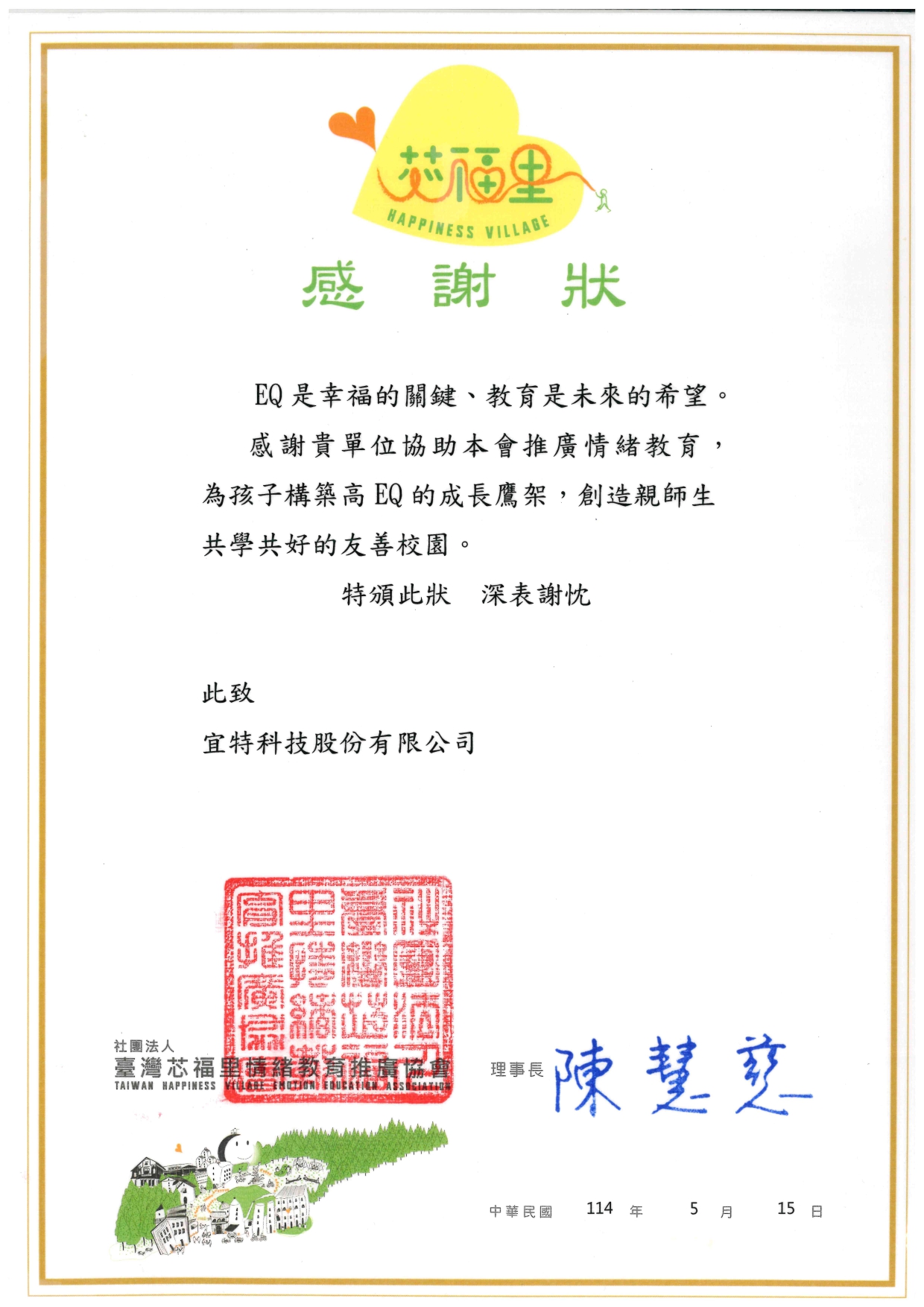
Recognizing the vital role emotional well-being plays in a child's development, iST continues to support the Happiness Village Association for Emotional Education in its mission to promote emotional literacy in schools. Through structured and age-appropriate programs, the organization helps students develop the ability to recognize, express, and manage their emotions while fostering empathy, communication skills, and healthy interpersonal relationships. For many years, Happiness Village has worked closely with schools, educators, families, and volunteers to integrate emotional education into everyday learning. By combining educational expertise with practical classroom activities, the organization helps create supportive environments where children can develop confidence, resilience, and a deeper understanding of themselves and others. According to the Association's 2024–2025 academic year impact report, its emotional education programs reached 236 schools across Taiwan, serving 5,456 classes and benefiting more than 119,000 student interactions. Among these, 16 elementary schools in Hsinchu City and Hsinchu County participated in the program, making the region one of the key areas for local implementation. Through volunteer-led classroom activities and collaboration with teachers, emotional education becomes a natural part of students' daily school experience rather than a standalone lesson. For iST, supporting education means more than providing access to knowledge—it also means helping young people develop the skills they need to navigate life with confidence and resilience. While emotional growth may not be reflected in test scores, it plays a significant role in shaping a child's self-esteem, relationships, and future well-being. By learning to understand and manage their emotions, children become better equipped to face challenges, communicate effectively, and build meaningful connections with others. These are life skills that will continue to benefit them far beyond the classroom. Looking ahead, iST remains committed to supporting the emotional well-being of children and adolescents. Together with Happiness Village and other educational partners, we will continue to promote emotional education in schools, helping cultivate a generation that embraces empathy, respect, resilience, and emotional health—one classroom at a time. |
 |
Recognizing the vital role emotional well-being plays in a child's development, iST continues to support the Happiness Village Association for Emotional Education in its mission to promote emotional literacy in schools. Through structured and age-appropriate programs, the organization helps students develop the ability to recognize, express, and manage their emotions while fostering empathy, communication skills, and healthy interpersonal relationships. For many years, Happiness Village has worked closely with schools, educators, families, and volunteers to integrate emotional education into everyday learning. By combining educational expertise with practical classroom activities, the organization helps create supportive environments where children can develop confidence, resilience, and a deeper understanding of themselves and others. According to the Association's 2024–2025 academic year impact report, its emotional education programs reached 236 schools across Taiwan, serving 5,456 classes and benefiting more than 119,000 student interactions. Among these, 16 elementary schools in Hsinchu City and Hsinchu County participated in the program, making the region one of the key areas for local implementation. Through volunteer-led classroom activities and collaboration with teachers, emotional education becomes a natural part of students' daily school experience rather than a standalone lesson. For iST, supporting education means more than providing access to knowledge—it also means helping young people develop the skills they need to navigate life with confidence and resilience. While emotional growth may not be reflected in test scores, it plays a significant role in shaping a child's self-esteem, relationships, and future well-being. By learning to understand and manage their emotions, children become better equipped to face challenges, communicate effectively, and build meaningful connections with others. These are life skills that will continue to benefit them far beyond the classroom. Looking ahead, iST remains committed to supporting the emotional well-being of children and adolescents. Together with Happiness Village and other educational partners, we will continue to promote emotional education in schools, helping cultivate a generation that embraces empathy, respect, resilience, and emotional health—one classroom at a time. |
|
